Decorative concrete in Menlo Park CA - color matched to how the surface gets used
Plain gray slab, or an old stamped patio gone blotchy and slick? We pour, color and seal a surface that fits how you use it.
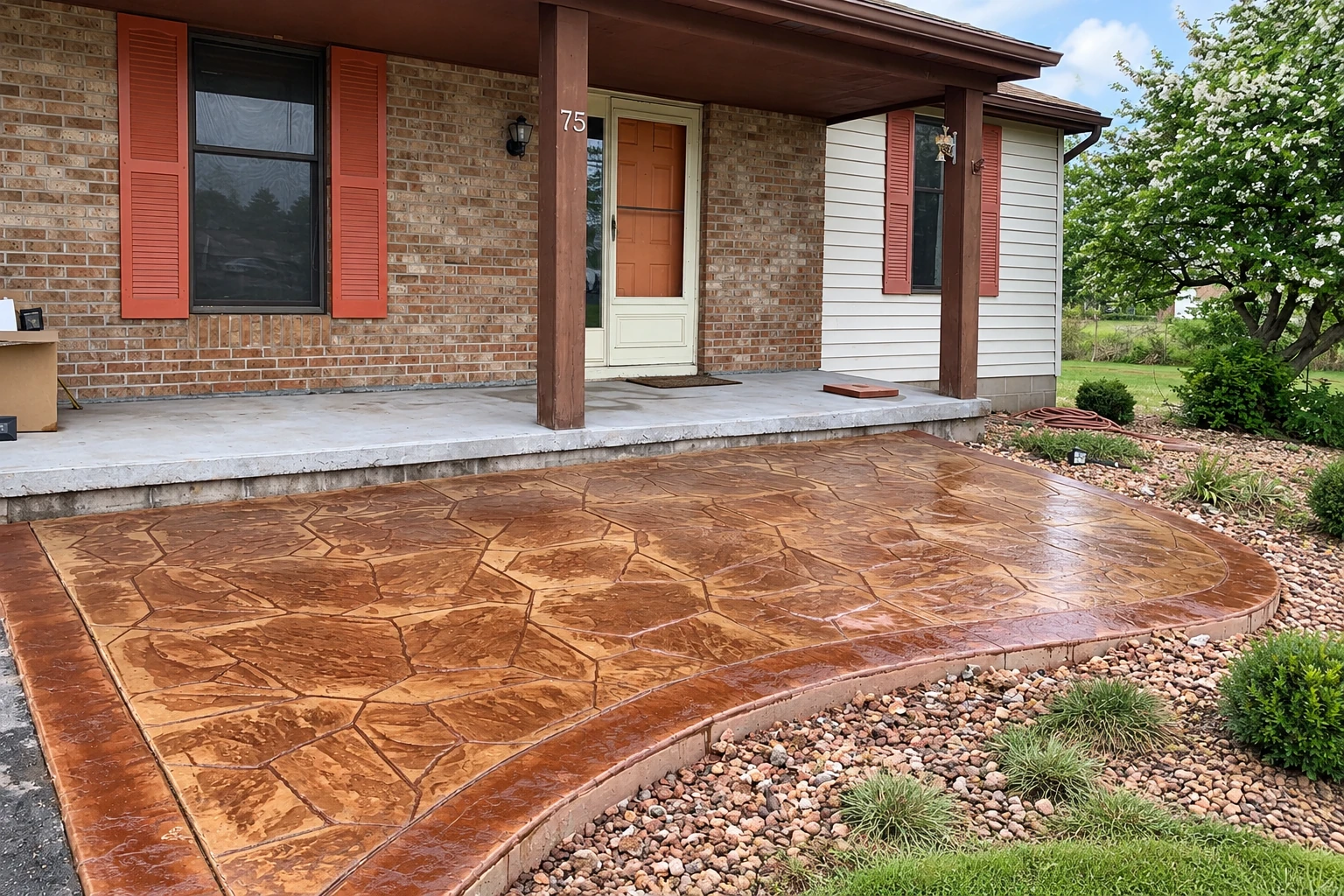
At Hallmark Menlo Park Concrete, decorative concrete means a poured slab that gets colored, often pressed with a pattern while it's still soft, then sealed, so a patio, walk or driveway looks like stone, brick, wood or tile. Most people call us because the slab they have is plain gray, or because an older colored one has gone blotchy, chalky or slick.
I start with the part you won't see, the subgrade, the packed ground the slab sits on, because a nice pattern on a base that settles still cracks. The price moves with the size, the pattern, the color method and how much old concrete comes out. The schedule turns on what the city asks for at your address and on the weather. The estimate puts what we'll build and the price in writing.
What we handle on a decorative concrete job
- Base dug out and packed. We dig out and pack the base instead of raking the dirt level, and we check where water runs so the finished slab falls away from your house.
- Color spread evenly, sealed lightly. We spread color evenly so it doesn't come out blotchy, then seal in two light coats, because one heavy coat bubbles, turns white and gets slick when wet.
- Joints that follow the pattern. Control joints are planned cuts that give a slab a place to crack. We line them up with the pattern, so a crack runs where a line already is.
- I estimate it and run it. I come out to look and write the estimate myself, our crew does the work, and I run the job on site. We've been in business since 2023.
- Licensed and fully insured. We're licensed and fully insured. Work in the public right of way, the city's strip along the street, needs a Menlo Park business license and a state contractor's license.
What goes wrong with colored slabs
| Problem | What it looks like | Usual fix |
|---|---|---|
| White, slick sealer | What it looks like: Cloudy white patches or bubbles, slippery once it gets wet | Usual fix: Strip the heavy coat, reseal in two light coats |
| Faded, chalky stain | What it looks like: Dull color that powders and wears off where people walk | Usual fix: Clean, restain where needed, then seal it |
| Cracks across the pattern | What it looks like: Cracks cutting through stones or bricks instead of along lines | Usual fix: Replace the section with joints set along the pattern |
| Sunken or ponding section | What it looks like: One part sits lower than the rest, water pools after rain | Usual fix: Remove it, dig out and pack the base, repour |
Picking how the color goes in
- Integral color. The color is mixed through the whole slab, so a chip or saw cut shows the same shade and it ages without pale scars. It won't give the deepest or brightest tones.
- Color hardener. Spread over the fresh surface, it gives a harder skin, which is why it's common on driveways and anything that takes traffic. Deep damage shows gray, because the color lives on top.
- Stain on a cured slab. Stain colors a slab you already have, or a new one once it's cured, when you want a mottled look without a pattern. Indoors, it pairs well with new concrete floors.
How we plan and pour it
- Tell us the job. Call or send the form, and we'll set a time for me to come out and see the surface you have in mind.
- Measure and write it down. I measure, look at the ground, the trees nearby and where water runs, then write in plain words what we'll build before I put a price on it.
- Sort out the city. We find which office covers your address and what it asks for. If a permit's needed, we handle it or help you with it, and we wait until it's in place.
- Forms, pour and color. We set and check the forms before any concrete is ordered, then our crew pours, colors, presses the pattern, cuts the joints and seals.
- Walk it with you. We clean up, walk the job with you and tell you how long to stay off it while it cures, the slow hardening that sets its strength.
Looking after a decorative slab afterward
What keeps decorative concrete sound is mostly the packed base underneath, which needs nothing from you, and the sealer on top, which wears. Concrete can still crack a little, and I'd rather tell you that now. Keep the sealer up, as the resealing answer below explains, and the color holds better.
We work for homeowners and property owners in Menlo Park and the cities around it, from San Mateo down to Cupertino, on patios, walks, driveways and the retaining walls that often sit beside them. If you're weighing a colored or patterned surface, ask us for an estimate and I'll come take a look.
Tell us about your surface
Send the surface, rough size, any big trees nearby and whether it reaches the street. We reply within one business day and set a time to come out.
(650) 582-0556- Free estimate at your property
- No obligation to go ahead
- Scope written in plain words
Questions about decorative concrete
Which color method is better for a driveway in Menlo Park?
Color hardener is the usual pick for driveways, because its harder skin stands up to car traffic. If you'd rather a deep chip not show gray, integral color is the more forgiving choice, and I'll lay out both on site so you can decide.
How often does stamped concrete need to be resealed?
One field guide advises resealing every 2 to 3 years, so it's worth planning as regular upkeep rather than a repair. Thin, even coats matter on a reseal too, since a heavy coat is what turns white and slick.
Do I need a city permit to redo my driveway at the street in Menlo Park?
Yes, work in the public right of way, including enlarging or replacing a driveway, needs an encroachment permit, the city's permission to work on public land, from the Public Works Director. Where that strip ends at your driveway is something we check with the city before we set a date.
Can a stained concrete finish go outdoors?
Yes, a stain can go outside, but it has to be sealed or it dulls, chalks and wears the color away. Dyes are different, because most fade in sunlight, so they belong on indoor floors. On a new slab, stain waits until the concrete has cured about 28 days.
Do I need a tree plan to pour concrete near an oak in Menlo Park?
Yes, if the work comes within 10 times a heritage tree's trunk diameter, the city needs an approved tree protection plan before a grading or construction permit. That means native oaks 10 inches or more across, and other trees 15 inches or more, measured 4.5 feet up. We check how it applies with the city.
Does a large new patio in Menlo Park need a drainage plan?
It can, because the city requires a grading and drainage plan when a building project turns more than 500 square feet of a lot from ground that soaks up water into hard surface. How that applies to patio work alone is a question we put to the city before we set a date.