Concrete patio construction in Menlo Park CA - a patio that sits level and drains
Bare dirt, a sunken old slab or puddles by the back door? We pour a concrete patio on a packed base, sloped to shed water.
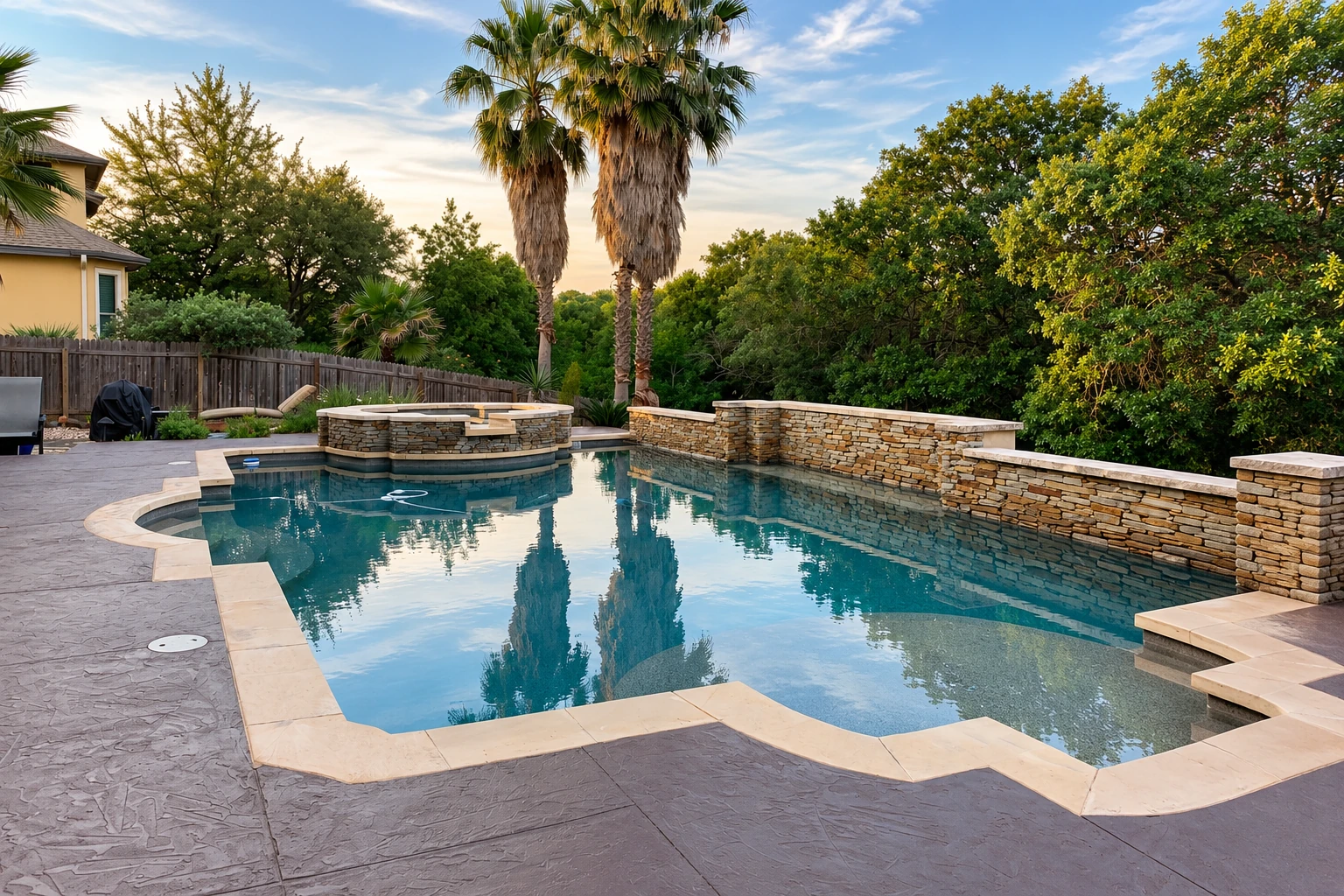
Concrete patio construction in Menlo Park starts below the surface, because a patio is a slab poured right onto prepared ground and the soil under it carries the weight. Most calls come after an old slab has sunk, cracked across the middle or started holding water by the house. Those problems usually trace back to a base that was raked flat instead of dug out and packed, so that's where we spend our time.
What moves the price is the size and shape of the patio, how much digging and hauling it takes to reach firm ground, how easy the backyard is to get to and the finish you pick. The schedule turns on the weather and the days the slab needs to cure. After I've seen your yard, I write down what we'll build and put a price on it. I'll also tell you before we start that a few small cracks are normal.
What goes into a concrete patio we build
- Gravel base, packed in layers. We dig out to firm ground and lay the gravel base a little at a time, packing each layer, because the base decides more than the surface how long a slab lasts.
- Licensed and fully insured. We're licensed and fully insured, and I'm happy to show you both when I come out to measure your yard.
- Forms set so water drains. We set the forms so the patio slopes away from your house and check them before concrete is ordered, lining up any concrete sidewalk that meets it.
- I estimate it and run it. I come out to look at the job and write the estimate myself, then run the job on site while our crew does the work. I started this business in 2023.
What goes wrong with patio slabs
| Problem | What it looks like | Usual fix |
|---|---|---|
| Sinking slab | What it looks like: One edge or corner has dropped, leaving a lip to trip on | Usual fix: Break it out, dig down and pack a new base |
| Water pooling | What it looks like: Puddles that sit after rain, or water running toward the house | Usual fix: Regrade and pour with a slope away from the house |
| Cracks in odd places | What it looks like: Cracks running across the slab in places nobody chose | Usual fix: Control joints, planned cuts that give cracks a place to open |
| Dusty, flaking top | What it looks like: Surface that chips, turns powdery or flakes within a few years | Usual fix: Skip the midday heat and keep the new slab covered and damp |
Repair, replace a section or pour new
- Patch the cracks. Suits a slab that's still level with a few thin cracks, where sealing them keeps water from working its way underneath.
- Replace a section. When one end has sunk but the rest sits firm, we can cut out that part, rebuild the base under it and pour it back, though new concrete rarely matches old in color.
- Pour a new patio. Best when the slab is broken, sunk all over or tips toward the house. You can pick a broom finish, a light texture that grips wet shoes, or stamped concrete.
How a patio job runs
- You get in touch. You call or send the form with a rough size and a few photos of the yard, and we set a time for me to come out.
- I measure and look. I measure, check the ground, the trees nearby and where water runs, then write down in plain words what we'll build before I put a price on it.
- Permits, then forms. We find out what the office for your address asks for and handle or help with any permit, then set and check the forms before concrete is ordered.
- Pour and walk-through. Our crew pours, finishes and cleans up, then I walk the finished patio with you and go over how long to stay off it.
What keeps a new patio sound for years
What keeps a patio sound later is mostly settled before the pour. The base is hidden on day one, so it's the first thing people want to trim from a budget, and it's the last thing I'd cut. A plain finish over a good base will outlast a fancy one over raked dirt.
We're based in Menlo Park and work in the cities around it, from San Mateo down to Cupertino and beyond, including Palo Alto and Redwood City. A lot of our patio calls come from people replacing a tired backyard slab or pouring one where there was only dirt. Call (650) 582-0556 for a free estimate.
Tell us about your patio
Send the patio's rough size, what covers the ground now and a few yard photos. We reply within one business day to set a time to come out.
(650) 582-0556- Free estimate at your property
- No obligation to go ahead
- Plain-words plan with your price
Patio questions we hear most
Will my new concrete patio in Menlo Park crack?
Probably a little, because even a well-built slab isn't realistically crack-free and some cracking is normal on every job. Wire mesh or fibers, used in many home slabs, keep cracks tight rather than stopping them, and control joints give them a neat place to open. I'd rather you hear that from me now.
What makes a concrete patio last?
The gravel base, laid in thin layers and packed down, matters more than anything on top of it. Good curing and ground graded so water runs away from the slab do the rest. When you compare bids, ask each contractor how they'll prepare the base, since it's a poor place to save money.
Does the soil in my yard matter for a concrete patio?
Yes, because soil that swells when it gets wet or squeezes down under weight needs special handling before a slab goes on it. I check the ground on every lot when I measure, and if it looks like problem soil, that changes how we dig out and build the base, and the price with it.
When can I walk on my new concrete patio?
One guide says a new slab can take foot traffic after 24 to 48 hours. The top is firm by then, but the slab keeps gaining strength as it cures, not just as it dries, so hold off on heavy furniture and the grill until we say it's ready.
How is a new concrete slab cared for in its first days?
It stays covered and damp, because curing, the slow hardening that gives concrete its strength, matters most in the first several days. Plan on covers or a sprinkler staying in place through that time. Concrete cures best above 50 °F, and hot or cold days change how we cover it.